

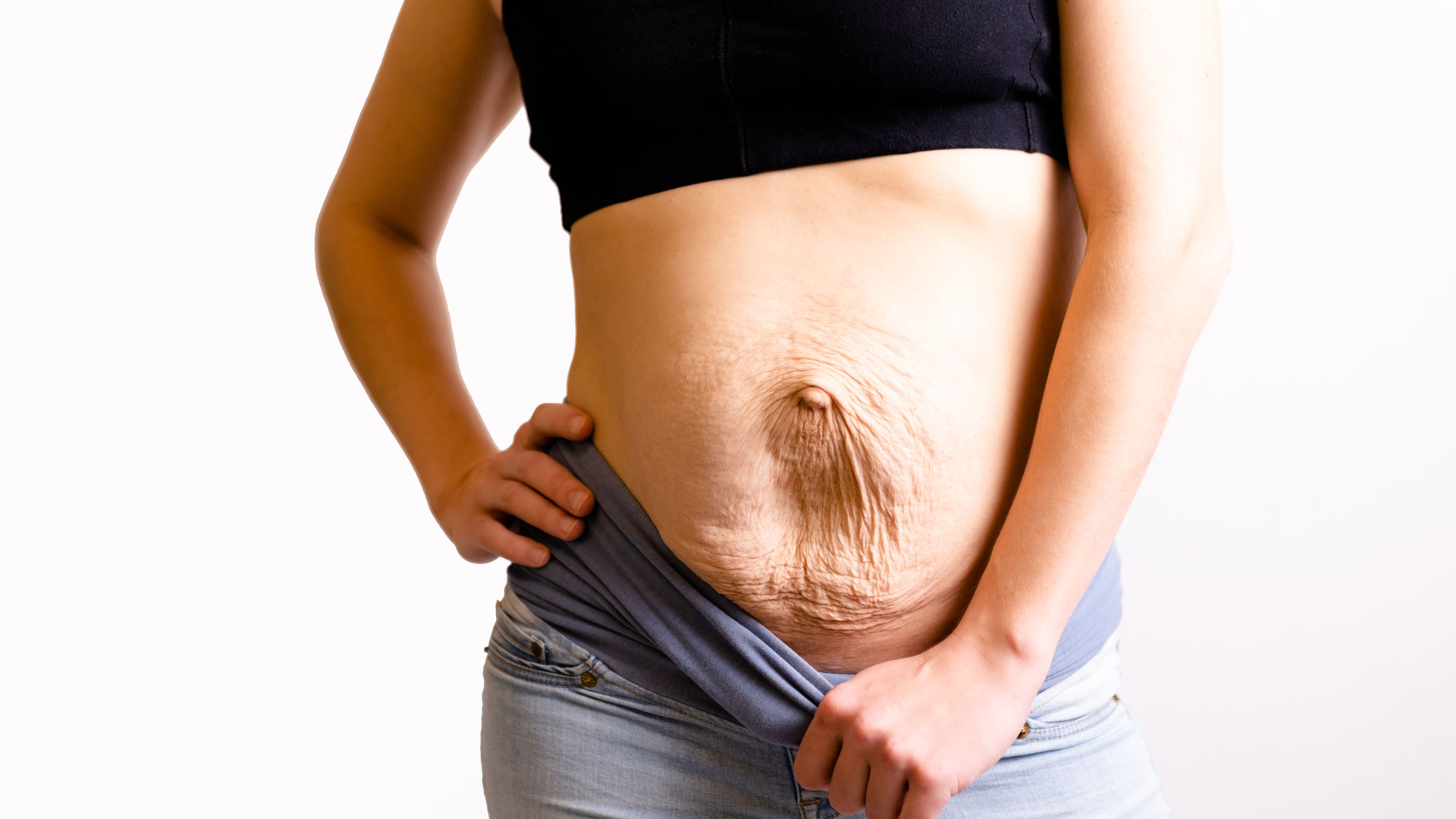
If you recently had a baby, you’re likely excited to say goodbye to your postpartum “pooch.” However, after a few months postpartum, you may be confused why you still have a visible bulge above or below your belly button, and may ask yourself: Isn’t that supposed to go away?
If this sounds like you, you may be dealing with postpartum diastasis recti. Here’s some information about postpartum diastasis recti, including what it is, what causes it, how to prevent it, and how to treat it effectively.
What Is Postpartum Diastasis Recti?
Diastasis recti describes when the abdominal muscles separate from the abdominal wall during or after pregnancy. Diastasis usually develops in the third trimester, but many women don’t notice the gap until the postpartum period. This separation can cause a woman’s belly to stick out or “bulge” for an extended period of time postpartum.
It’s important to clarify that if you developed diastasis recti during your pregnancy, your abdominal muscles haven’t necessarily “torn” or “ripped.” In fact, we all have a small gap between our abdominal walls and muscles. Diastasis occurs when that gap is stretched, widened, or expanded to at least two centimeters or more.
There are two types of postpartum diastasis—structural and cosmetic. Structural diastasis describes when the muscles and tissues have torn and may not be able to recover on their own. However, most women with diastasis recti are dealing with cosmetic diastasis, which describes when your body has healed functionally, but your abdomen remains stretched out and may look “saggy.”
Who Is More Likely to Develop Diastasis?
Certain types of women and pregnancies may be more prone to developing diastasis, including:
Athlete Pregnancies
Women who are athletes may assume they are less at risk of developing diastasis, but actually, the opposite is true. Athletes tend to have strong, tight muscles, which leads to a lack of flexibility in their tissues. During pregnancy, the muscles stretch, stretch, and stretch until they give, which can lead to a more significant gap in the midline as the baby grows.
Muscle Tightness
Diastasis can be caused by tightness in the back, ribs, hips, or whatever area is taking the brunt of the baby’s growth. If your baby is positioned in a way that’s pushing on your abdomen, you are more likely to develop diastasis than if you carried your baby more evenly.
Twins & Triplets
Of course, if you’re carrying twins or triplets, you are more likely to develop diastasis recti. Even if you’re not having multiples, if you’re carrying a larger baby, you are more likely to develop diastasis than a woman carrying a smaller baby.
Tissue Elasticity
Just like some women scar more easily than others, and some women develop stretch marks more than others, some women have more tissue elasticity than others. If your tissues don’t have much elasticity, you may be more at risk of developing diastasis.
How Can I Tell If I Have Postpartum Diastasis?
It can be challenging to tell if you have postpartum diastasis recti, but generally, you can check by doing the following exercise:
Lay down and put two fingers on your belly button. Then, lift your head into a slight crunch. As you slowly move upward, see if you can fit three fingers, then four fingers, then possibly more into your belly muscle to determine the depth of your diastasis. Then, do the same one to two inches above your belly button and one to two inches below your belly button to determine the width of your diastasis.
We have a self-check video on our website that can guide you through determining whether you have postpartum diastasis. However, if you still have questions, our team at Moment of Truth Physical Therapy would be happy to help you!
Is There Anything I Can Do to Prevent Postpartum Diastasis?
There are a few ways you can minimize your risk of developing postpartum diastasis recti before getting pregnant.
First, you can work on your range of motion and general flexibility to keep your tissues stretched, flexible, and engaged. Second, massage your abdomen to keep the tissues more pliable before getting pregnant.
What Should I Do If I’m Experiencing Postpartum Diastasis?
If you’re already dealing with postpartum diastasis, you’re likely wondering what you can do to treat it. First, it’s important to understand your body.
There isn’t a “one-size-fits-all” solution to healing postpartum diastasis. If you see a program that promises to fix all your problems without ever meeting you in real life, it’s probably filled with generalizations and guidelines that may or may not work for you.
Instead, it’s better to have your diastasis checked out by a professional, so they can determine the width and depth of your diastasis, what you’re capable of from a movement and breathing standpoint, and some target areas for healing—and then build from there.
How Can Moment of Truth Physical Therapy Help Postpartum Diastasis?
If you suspect you’re dealing with postpartum diastasis, Moment of Truth Physical Therapy can perform a thorough internal and external evaluation. During this evaluation, we determine if your pelvic floor is tight and weak or pliable and strong. Then, we help develop a program to build your core muscles and pelvic muscles to prevent or address diastasis and prolapse.
Schedule your free discovery session in Peoria, Arizona, to address your postpartum diastasis!
0 comments